Ridge · New Roof Installation
A new roof planned from the framing, not bolted on at dry-in
Shingle or standing-seam metal for new builds and additions, with the water path, venting and flashing settled before the deck is sheathed.
Where new roofs go wrong before a shingle is laid
Pitch, overhang, valley geometry and the position of the vents are all far cheaper to settle on paper than on a deck that is already sheathed. A dead valley behind a chimney chase, or a wall that dies into a slope with nowhere for a kickout to go, is a leak that was designed in.
Additions fail at the junction. A new roof that meets an old one without lapping new underlayment beneath the existing courses lets water run behind the tie-in, and that is where most addition roofs start to stain the ceiling below.
Ventilation is the quiet one. Intake and exhaust sized as an afterthought leave the attic hot, and a hot attic ages the shingles from underneath. Settling the venting at the framing stage costs a conversation instead of a rework.
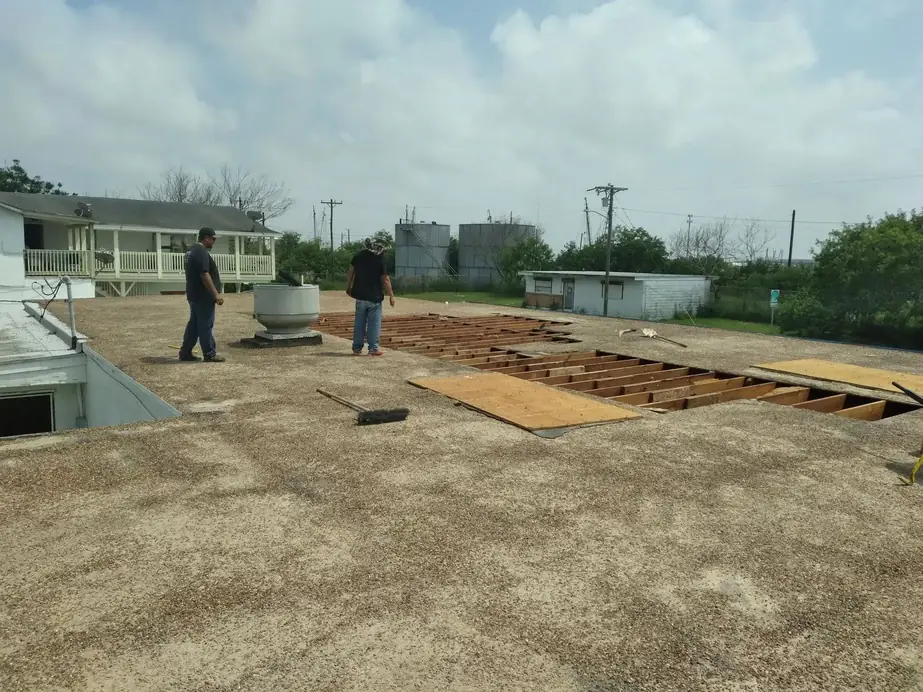
Two roofers on an open flat roof deck with rafter bays exposed
How Ariston works from framing to dry-in
We join the job at framing, not at dry-in. We walk the plans with the builder, flag anything that complicates the water path, and confirm the ventilation math before material is ordered. Bundles are staged to the deck the morning they are needed instead of dropped in the drive a week early, which keeps them out of the weather and off ground about to be landscaped.
On an addition we match the existing profile and color as closely as the product line allows, cut the tie-in back far enough to lap new underlayment beneath the old, and set a step-flashing sequence at every wall. If the original shingle has been discontinued, you see the nearest match in daylight before we order.
Shingle is the value choice and suits most subdivision rooflines. Standing-seam metal costs more up front, carries a longer service life, sheds heavy Valley rain quickly and reflects heat, so it earns its premium on low-slope sections and long uninterrupted runs. We quote both so the comparison rests on numbers for your roof. We install Owens Corning roofing products and pull the permit and book the inspection, scheduled around the builder's other trades.
The handover record and when to call us back
Every roof system we install is registered in the homeowner's name. At handover you receive the certificate together with the photo record of underlayment, flashing and ridge, taken before any of it was covered. That record makes a product claim straightforward years later, and it transfers with the house at resale.
Lead time moves with the season, and the weeks after a named storm are the busiest of the year. Bring us plans early and we will hold a slot against the framing schedule.
Ariston Construction is licensed as a manufactured housing installer by the Texas Department of Housing & Community Affairs (MHDINS00004804), fully bonded and general-liability insured. Call (956) 345-7700 from La Feria, McAllen, Brownsville or Edinburg for a free inspection and an itemized written estimate.
TDHCA license MHDINS00004804 · Bonded and general-liability insured · Owens Corning roofing · Free inspection
Ridge
New-build roof sheet
- At framing
- Plans walked with the builder; water path and vent positions flagged.
- Before ordering
- Ventilation math confirmed; both shingle and standing-seam quoted.
- At the tie-in
- New underlayment lapped beneath the old; step flashing at every wall.
- On the deck
- Material staged the morning it is needed, not a week early.
- Permit
- Pulled by Ariston, with the inspection booked around the other trades.
- At handover
- Certificate in your name plus the photo record of underlayment, flashing and ridge.
Roof going on an existing home instead? See roof replacement.