Underbelly Insulation: What Animals, Water and Ductwork Do Under a Mobile Home
The belly wrap, the insulation and the ducts under your floor work as one system, and when one fails the others follow.
October 17, 2026 · 4 min read
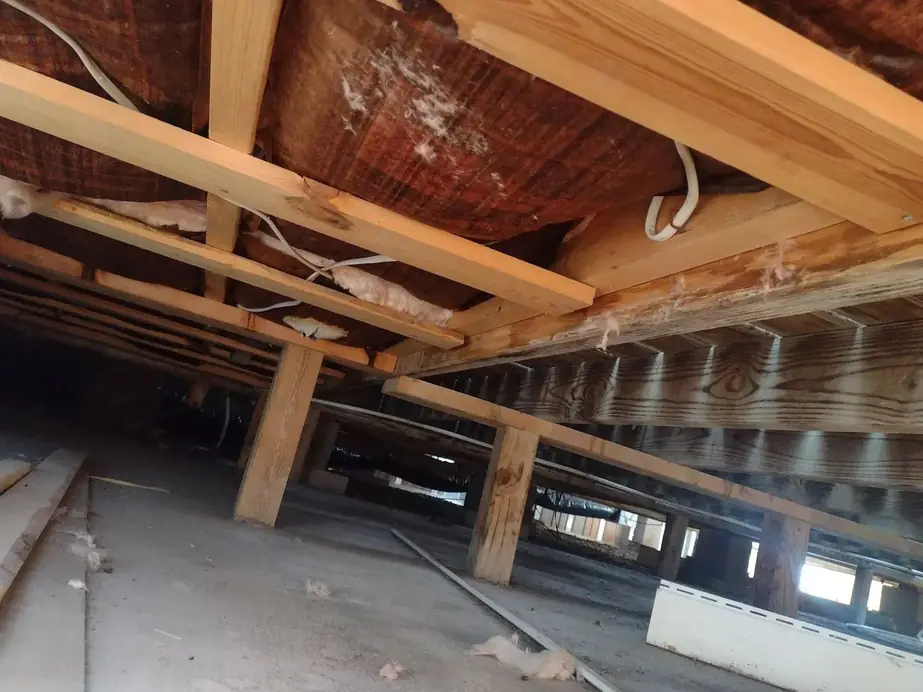
The part of a manufactured home you never see is the part that decides how hard your air conditioner works. Under the floor sits a layer of insulation held in place by a fabric belly wrap, and on most homes the supply ducts run through the same cavity. It's a system, and when one piece fails the others tend to follow.
How the wrap, insulation and ducts fit together
The belly wrap is a fabric barrier stretched across the underside of the frame. It holds the floor insulation up where it belongs and keeps the insulation and ductwork protected from weather, animals and ground moisture. As long as the wrap is intact, nobody thinks about it. Once it tears, the insulation above begins to sag, soaks up humidity and stops doing its job.
Tears have ordinary causes: a dragging branch, a plumber or other trade who cut an opening to reach a line and never patched it, or simply age in Valley heat. Most of the belly damage a crew finds under a home was made on purpose by someone reaching a water line, which is why resealing properly around lines and penetrations matters as much as the big repairs.
Water and wet insulation
Insulation that has been wet does very little, no matter how it looks from below. The right fix is to pull the soaked batts out, dry and inspect the cavity, then install new insulation at the correct depth and secure it so it doesn't sag back onto the wrap and start the cycle over.
Water can also come from below. Wet ground under a Valley home keeps the whole cavity damp regardless of what the wrap is doing. Where the site calls for it, a vapor barrier on the ground and corrected drainage and grade protect the new insulation, because insulation installed over standing moisture has a short life.
Animals: the wrap is not the only problem
Rodents find a tear in the wrap quickly. Once something has been living in the insulation, the damage goes beyond a hole in fabric: nesting, contaminated material, chewed wiring or ducts in the worst cases. A repair that only patches the wrap leaves the route open, and the job comes back.
A complete job clears the damage, removes contaminated material and disposes of it cleanly, repairs the entry points, and closes the gaps at the frame and skirting that let animals in to begin with. Skirting that is damaged lets wind, water and animals under the home, so it belongs in the same conversation.
Ductwork: where the cool air goes
On most manufactured homes the supply ducts run through the belly, and disconnected or split ducts are common. Conditioned air that escapes into the cavity is air you paid to cool and then spent on the space under your floor. Reconnecting, sealing and supporting each run so it can't pull apart again is some of the least glamorous and most useful work done under a home.
Signs the underbelly has failed
- The floor feels cold in one room and warm in another
- The air conditioner runs longer than it used to to get the same result
- You can hear scratching or movement below the floor at night
- Fabric is hanging down below the skirting
- A room never seems to get its share of air from the vents
Any of those is worth a look. It takes a few minutes with a light under the home to tell whether you need a patch or a full replacement of the wrap run.
Why the wrap, insulation and ducts get quoted together
Fixing only one piece rarely solves the problem. Wet insulation does little, and a leaking duct means the system is cooling the crawl space, so repairing the wrap while ignoring either one leaves the original complaint in place. That's why Ariston Construction assesses the wrap, the insulation and the ductwork together and quotes them together, with photographs of the cavity before and after so you can see what the work covered.
Small tears are patched with material rated for the job and taped so the seal holds under the airflow moving through the cavity. Where the wrap has failed across a large area, or has been cut open repeatedly for plumbing, replacing the run is better than building a patchwork that opens again next year.
What an underbelly check looks like
The check is free and carries no obligation, and the estimate comes in writing, itemized, before work starts. Ariston is licensed as a manufactured housing installer by the Texas Department of Housing & Community Affairs (MHDINS00004804), fully bonded and general-liability insured, and has worked in roofing, remodeling and leveling in the Valley for over 35 years. Senior and military discounts are available, and financing is offered through Acorn Finance.
The Underbelly Insulation page covers belly wrap repair, insulation replacement and duct sealing in more detail. To schedule a free underbelly check, call (956) 345-7700.
Ariston Construction LLC, (956) 345-7700
Call (956) 345-7700More articles
What Hail Does to a Shingle Roof in the Valley, and Why a Dated Photo Report Helps
Hail can damage a roof without leaving a hole, and the record you keep afterward matters as much as the repair.
Re-Leveling a Manufactured or Park Model Home: Signs, Piers, Tie-Downs and Storm Checks
A home on piers relies on the pier and anchor system staying where the installer left it, and in Valley clay it rarely does.